The Elder Scrolls Online
I began work on ESO as a design intern, then moved into encounter design, then systems and product ownership.I wrote supporting dialogue, ensured game systems presence, and scripted theatrical NPC activity in the following settlements:
Davon’s Watch, Ebonheart, Mournhold, Orsinium, Hew’s Bane, Karthdar, Reman’s Bluff/Barkbite, Redfur Trading Post, Haven, Elden Root, Evermore, Woodhearth, The Gray Mire, Shornhelm, Northpoint, Hoarfrost Downs, Fell’s Run, Northsalt Village, Hallin’s Stand, Leki’s Blade, Satakalaam, Murcien’s Hamlet, Arenthia, Dune, S’ren-ja, the Thizzrini Arena, Greenhill, Stros M’kai, Betnikh, the Hollow City, and Belkarth.
I was product owner and primary designer for all player crafting in the game, including balance metrics, skill line progression, overland resource distribution, and resource returns from item demolition. This also included two substantial craft overhauls, for Provisioning (to refit the system and reduce item and inventory bloat) and Alchemy (to add Poison-Making and rebalance reagents to correct several esoteric legacy bugs), and the Furniture Crafting feature extensions to support Housing.
I frequently investigated and implemented structural changes to existing gameplay elements or features to eliminate pain points or improve functionality, such as redoing and restandardizing boss summon logic, reevaluating how we were handling trigger volumes in densely scripted environments, finding ways to circumvent hardcoded asset data to empower players, or logic bridges to prevent infinite farming or dud events in summon-on-demand scripting.
I also wrote and scripted a number of persistent and seasonal NPCs: Rolis Hlaalu, Faustina Curio, Adhazabi Aba-daro, The Impresario.
And, I located and wrote riddle surveys for Jewelry Crafting when we found we hadn’t the budget for that craft system to have conventional survey maps. As a pivot, this was a really fast one, involving just a few days of work conceiving of a new character, slamming out a large number of overland terrain vignettes, and writing little story riddles to go with them.
Crafting, Iteration & Extension
I was product owner and primary designer for all player crafting in the game, including balance metrics, skill line progression, overland resource distribution, and resource returns from item demolition. This also included two substantial craft overhauls, for Provisioning (to refit the system and reduce item and inventory bloat) and Alchemy (to add Poison-Making and rebalance reagents to correct several esoteric legacy bugs), and the Furniture Crafting feature extensions to support Housing.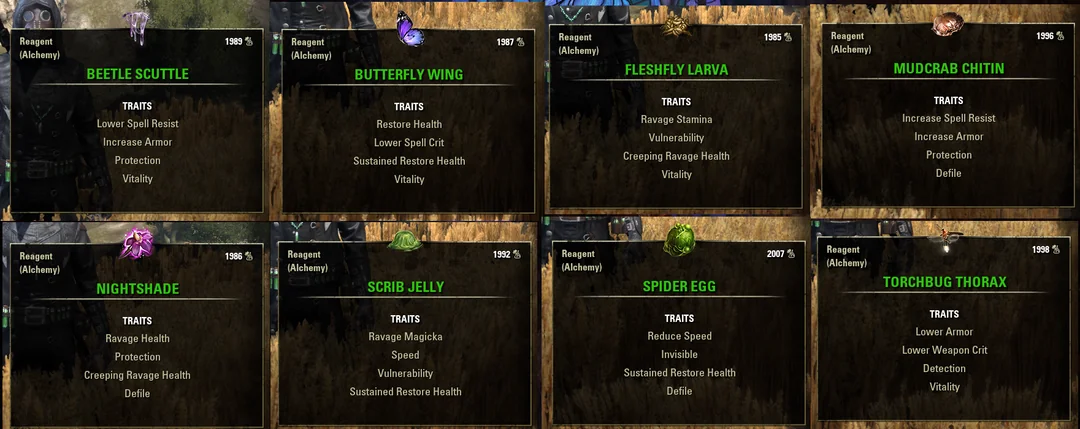
The Outfit System
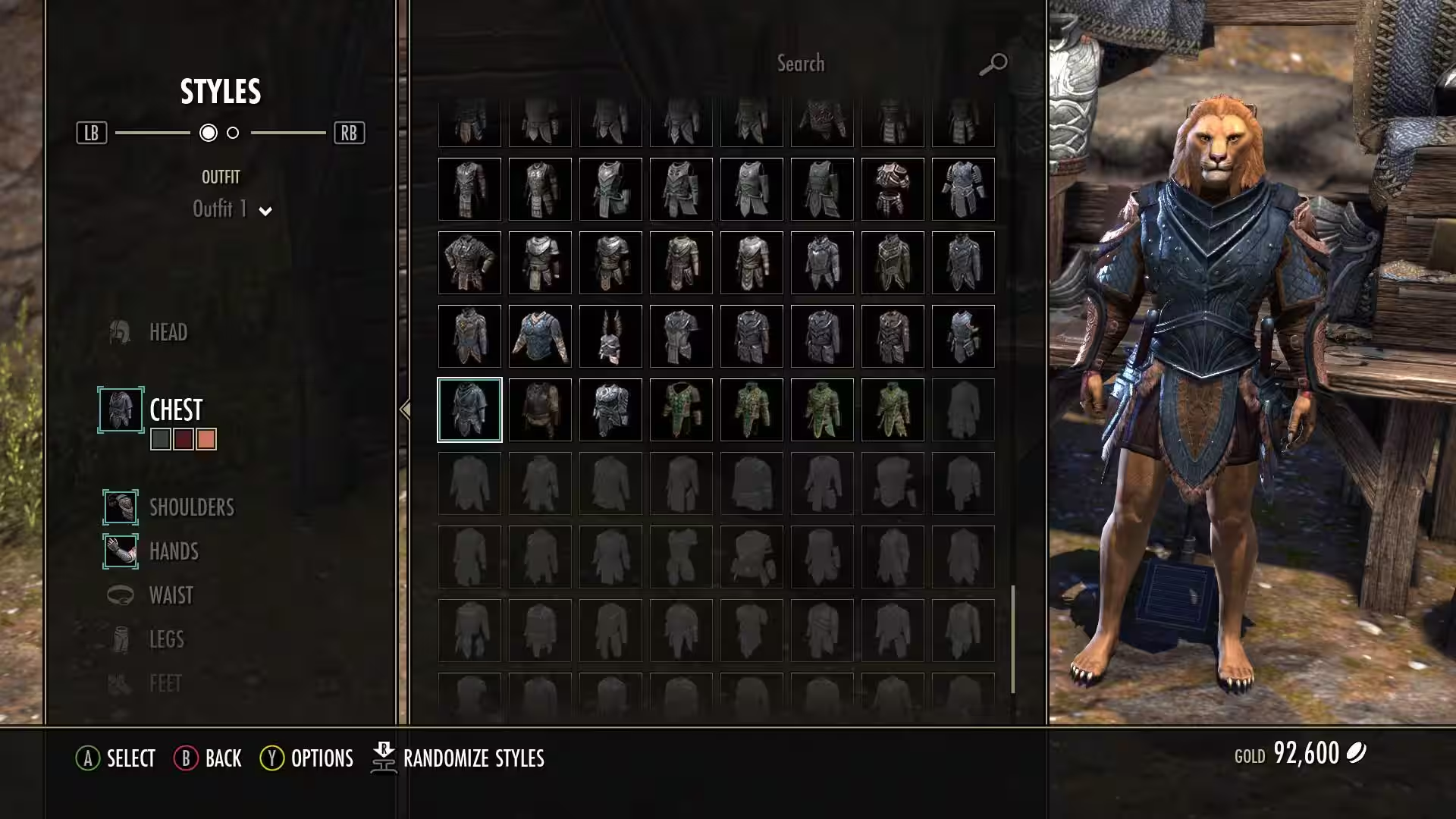
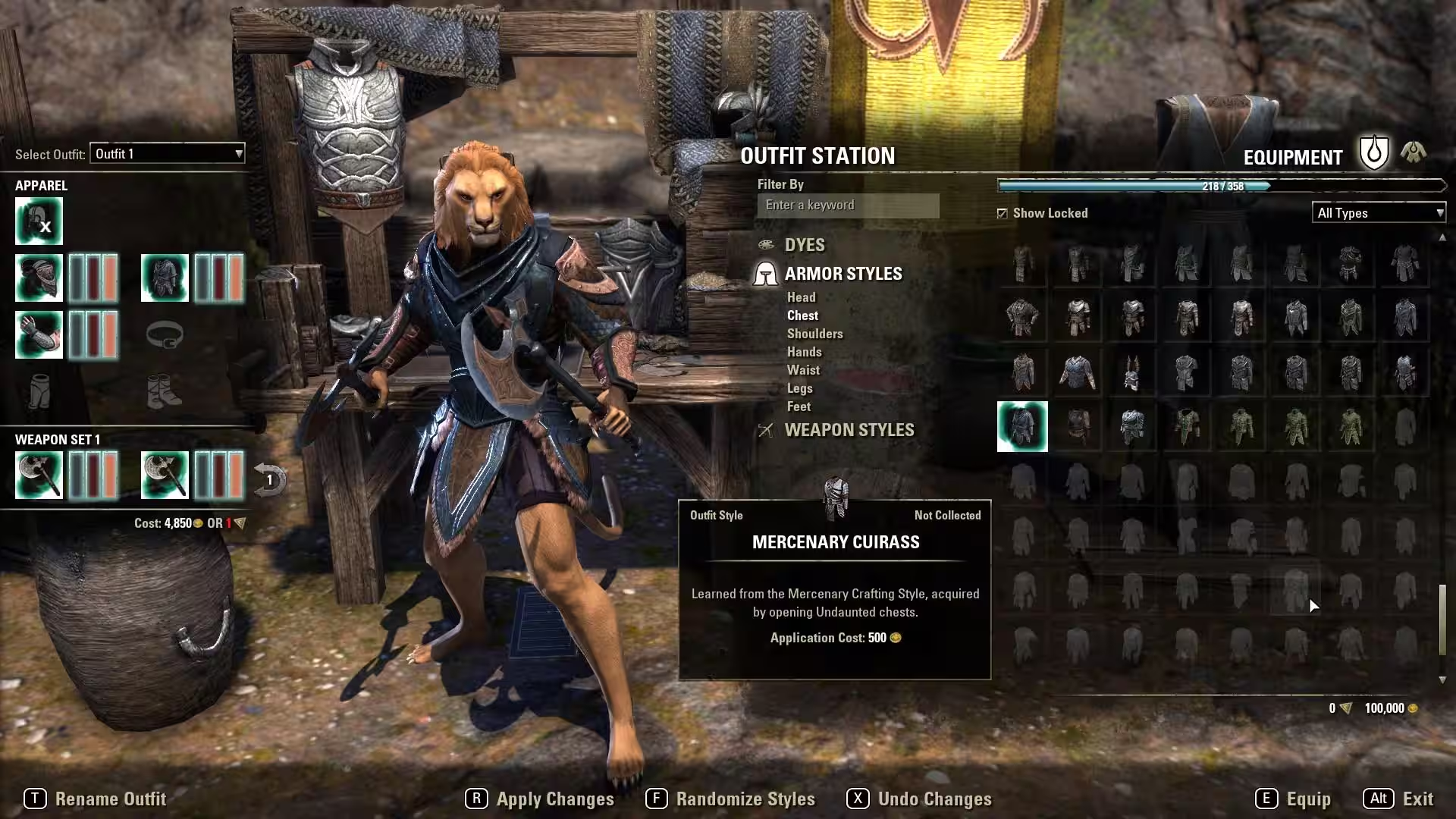
I designed and led the strike team for implementation of the Outfit system.
This was a substantial effort adding a gear appearance override and player identity system to the game, adding fine-detail customization of a player’s entire build and updating a number of NPC looks to include them to player availability. Each style replicates appearances gear can “naturally” be made or drop in, through style pages appearing in replayable content and salable through the player-to-player marketplace. Key goals for the system included providing substantial rewards for replaying casual content alongside desirable “chase” styles for challenging content.
This feature had direct ties to the Crown monetization efforts and saw measurable boosts to month-over-month income, in part due to a sales schedule I spearheaded focusing on in-fiction Daedric summoning days and celebrations of prior releases and provinces. Players have access to one style by default but can convert to unlock more, or get tokens to bypass the gold cost of changing a style. While there are a number of store-exclusive items, the store also provides direct access to many styles, allowing players to pay to bypass the gameplay pursuit of collecting them.
We also had a costume contest when we put it on the test server. Players had fun.
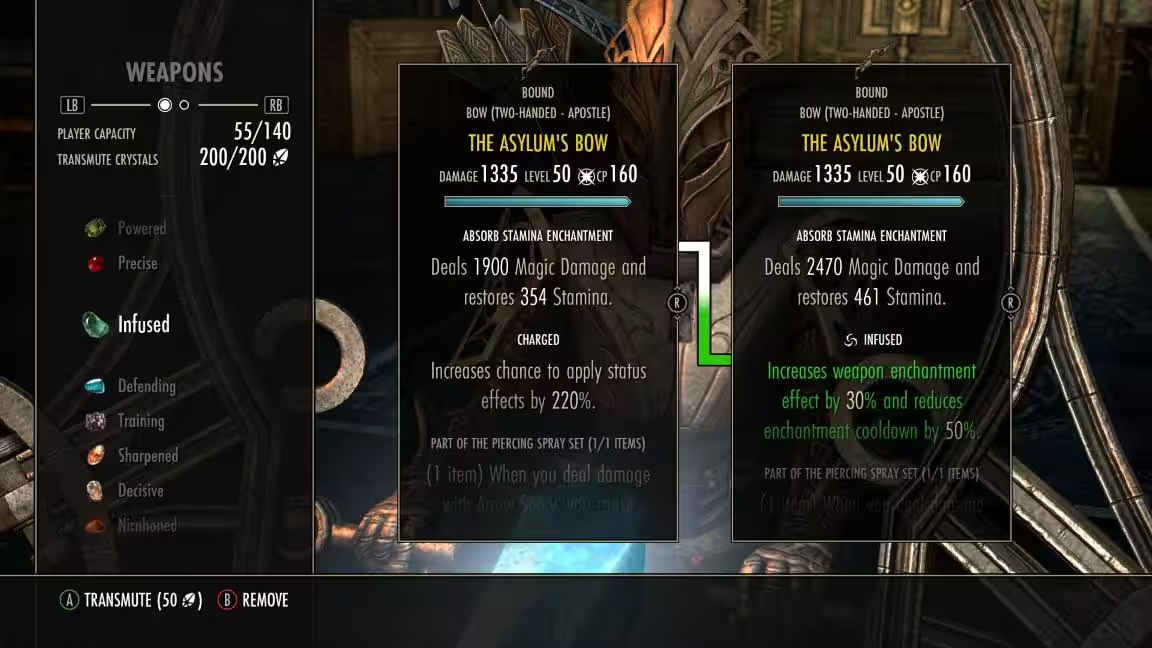
Transmutation
I designed and led the strike team for implementation of the Transmutation system. This was a first and major step the team took to enabling after-the-fact fine-tuning of items and builds by empowering players to alter previously hard-coded statistics on items, and the currency introduced would later be used for other build-empowering operations.Much of the design of this system was a technical analysis of how our item data is stored and how to allow replacing hardcoded elements in a nondamaging fashion, minimizing risk to the server or database or play experience.
The rest was economy design - what sources the new resource should come from, at what delivery rates, with limits per week. Delivery rate scales roughly per the expected challenge rating of the content a player is completing, meant to nudge players into testing themselves and rewarding players for the attempt (especially, for success).