Starfield
I worked in systems and technical design here; systems features to follow, but within the technical realm we have:

A new tool and design pipeline for rapidly developing modularized aliens to populate the many, many worlds represented in the game. The tool takes individual statistical, ecological, behavioural, and material qualities of alien creatures and compartmentalizes them so that a creature can be made intentionally or "shuffled" to rapidly produce new aliens - reducing assembly time from an hour or more per alien on a planet to minutes.

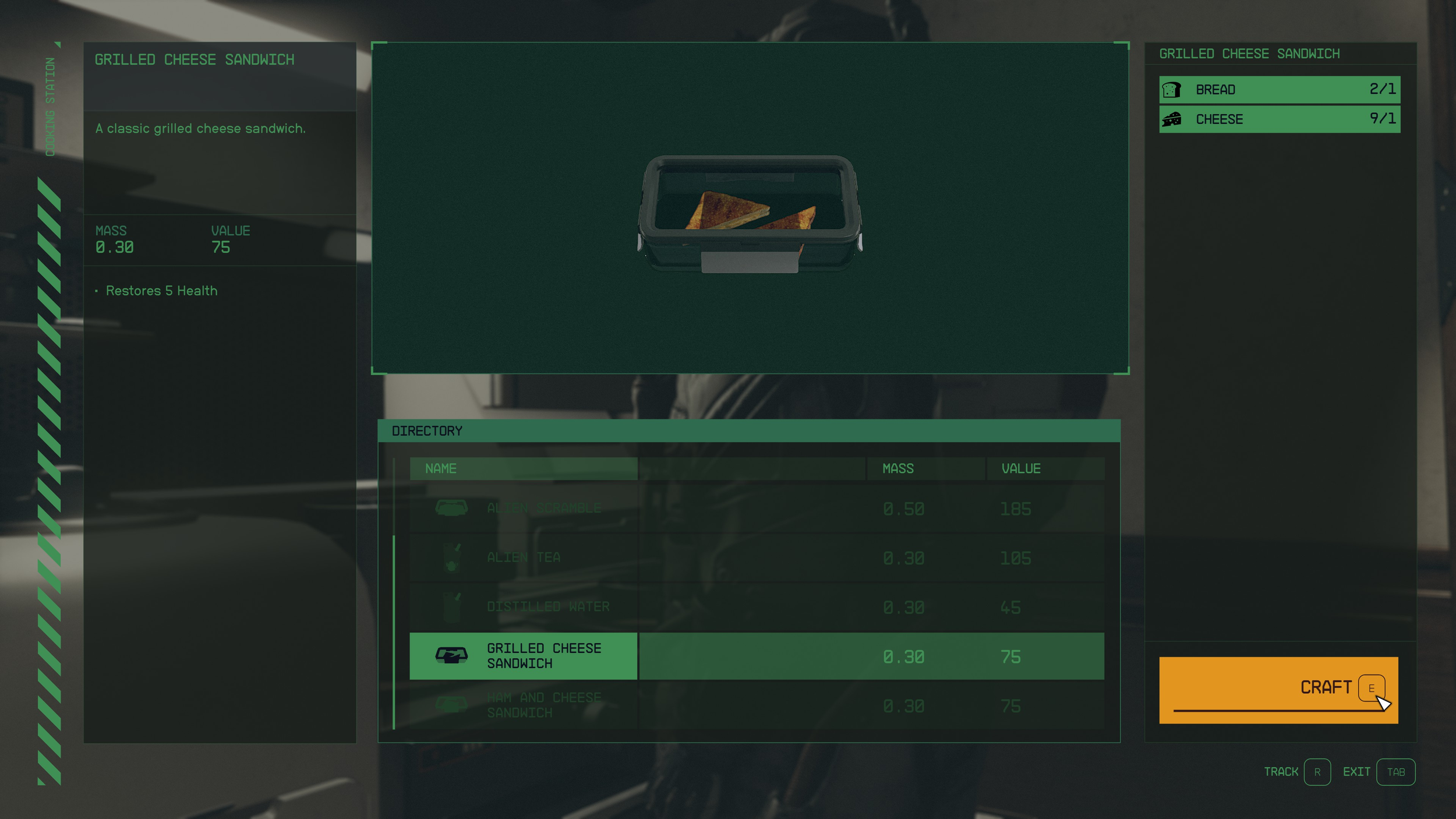
New item virtualization methods, allowing a label to stand in for a whole class of items within quest or crafting contexts. In particular this enabled us to use many kinds of bread for sandwiches, or any kind of meat or bean curd for "proteins” in cooking.
Crafting & Consumables
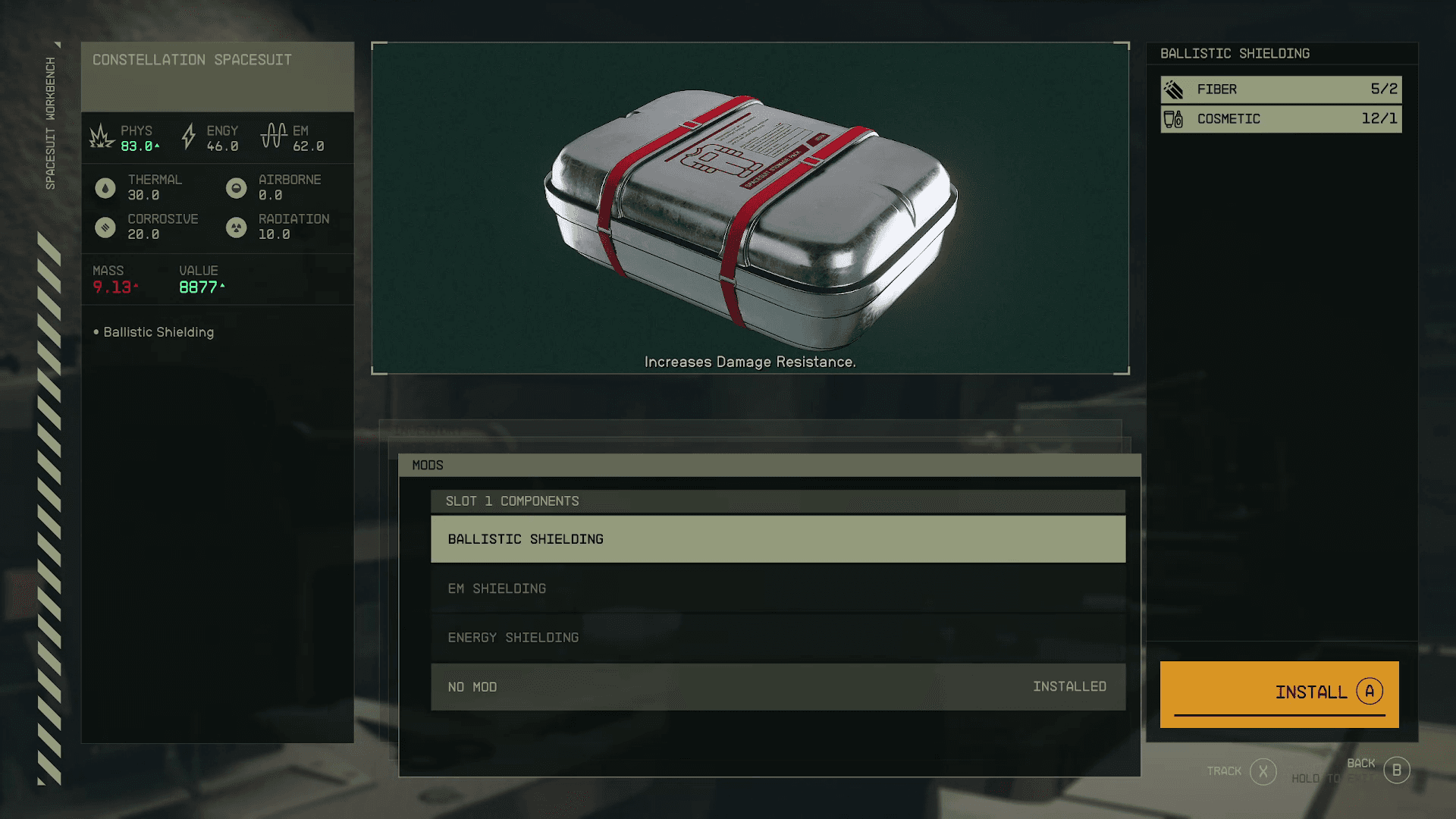
The Crafting system, for all products except Outpost and Shipbuilding. I was also heavily involved in designing the materials we would be using.
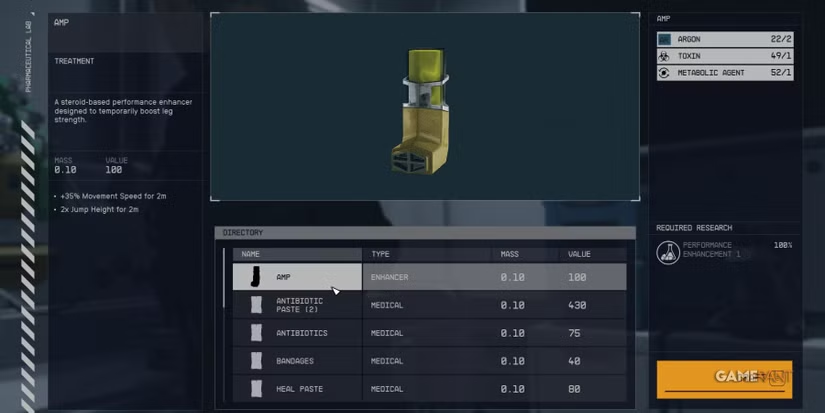
All pharmaceutical and culinary items, from conception to function and asset pipeline.
Research
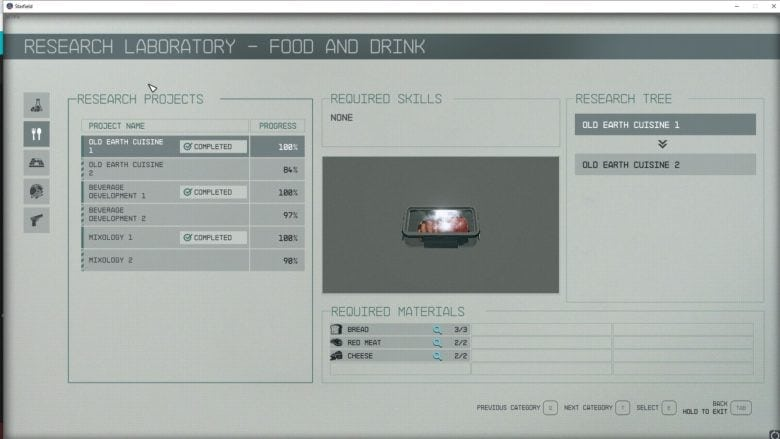
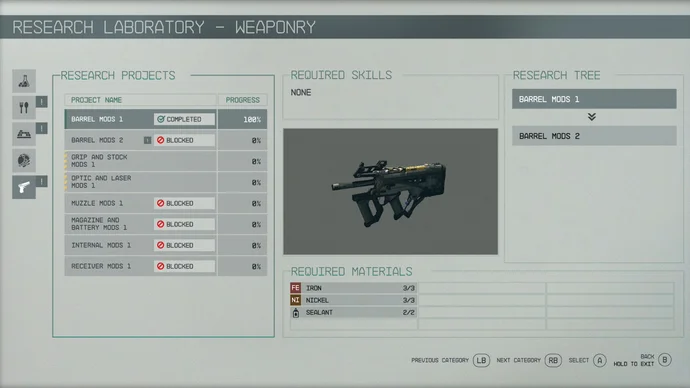
Originally drafted as a parallel crafting system to combat and exploration Perks, Research was bridged into the Perk system during development. Research projects were organized into major categories, with product family lines nested into them.
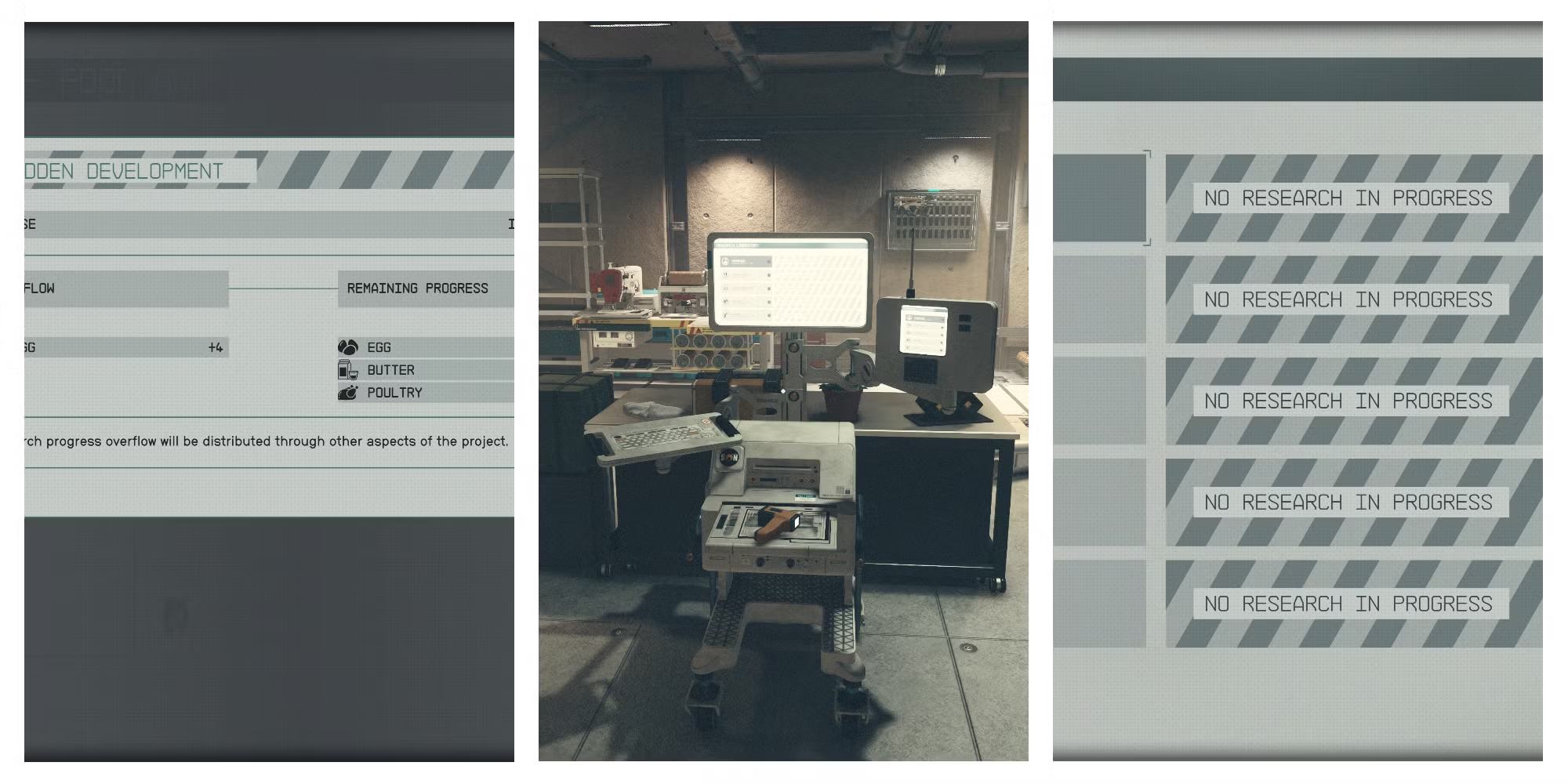
Research is “fed” raw materials to generate progress in an overall research experience bar, with an expected minimum value of material commitment for all the base needs of the item. But, research features “sudden development” critical hits more common with perk investment and net research materials committed at once, leading to players being able to overflow points from individual research actions and complete research with only one or two material investitures.
I also designed the UI frames for this, leveraging my arts background to save the team some time in a UI-heavy title.
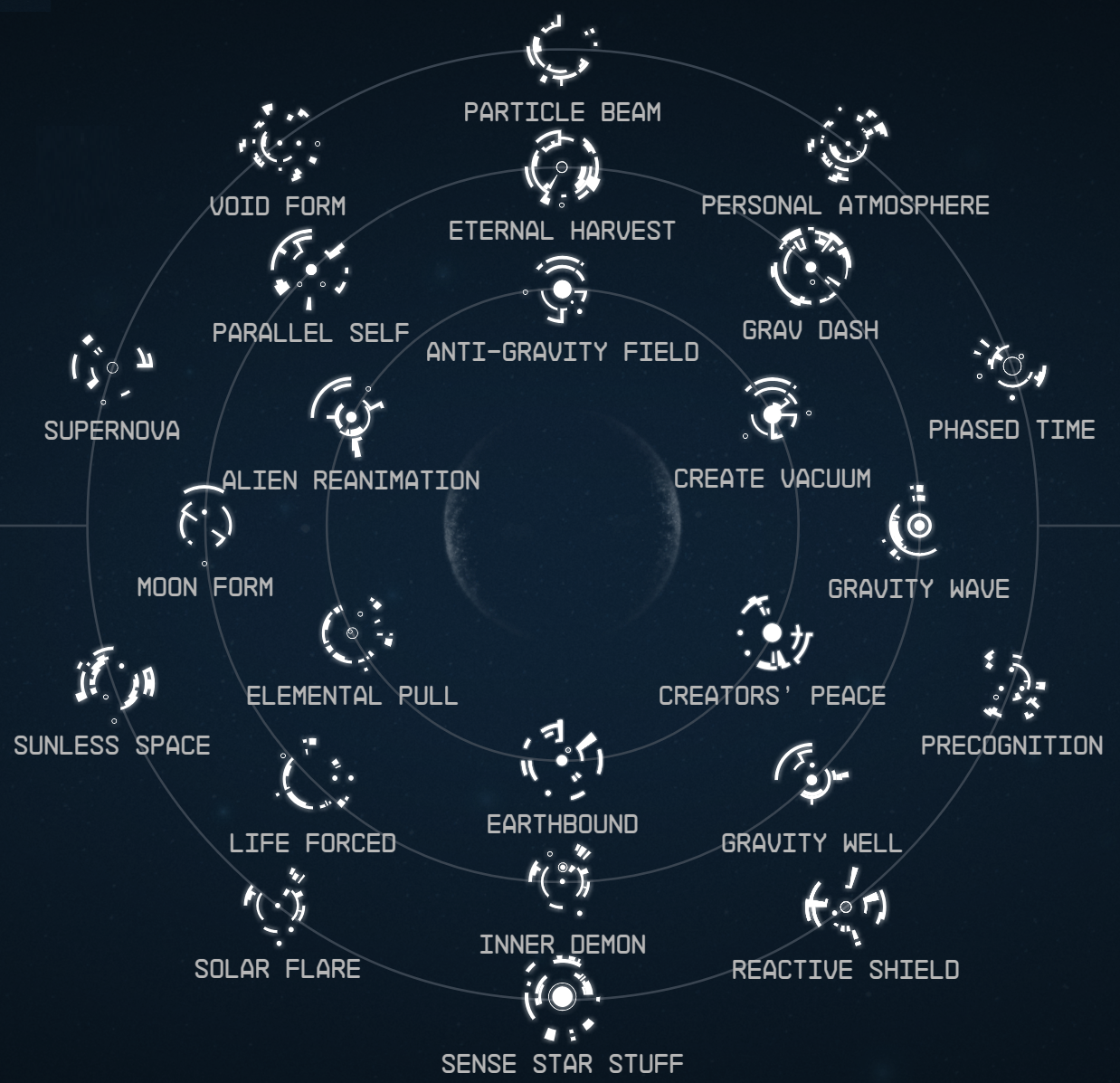
Starborn Powers
As part of the effort to introduce these powers, we undertook a substantial technical audit and exploration of what Papyrus would permit in a spell, what we could trick Papyrus into doing with a spell, and what we had done in titles prior to Papyrus that we could no longer do, or inversely, what we were doing with the engine that was fully new and needed novel support within Papyrus.
Alongside conventional effects like pacification, detection, lasers, explosions, invisibility, and infinite resource time, we added a precognitive ability, directional gravity fields, point-gravity attractors or repulsors, dead entity reanimation, and entity duplication.
Precognition in particular was an unusual challenge as we needed to contrive a way to message entities’ intended paths and actions to the player while also building hooks for dialogue and persuasion into the ability - despite being relatively simple in execution in play, the power itself is remarkably complex.